Press Contact & Media Kit
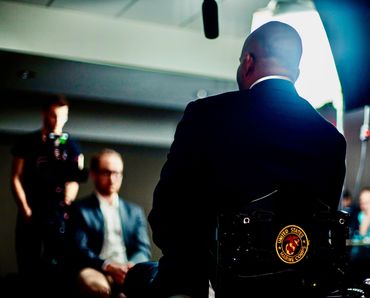

TITLE: THE STREET: WEAPONIZING PAIN, UNLEARNING SURRENDER
AUTHOR: Sherman Gillums Jr.
SHORT BIO: Dr. Sherman Gillums Jr. is a retired Marine Corps officer, former Executive Director of Paralyzed Veterans of America, and nationally recognized advocate for veterans, disability rights, and mental health. He has testified before Congress and advised U.S. Presidents on VA reform. THE STREET is his debut book.
SUMMARY: THE STREET examines fear, trauma, human formation, and the cost of becoming useful to systems that never asked whether we were whole.
It is not comfort. It is not self-help. It begins where survival stops being heroic and starts becoming a prison. Though written from a Marine's experience, it speaks to anyone who survived hardship and emerged functional but not free — reliable instead of healed, productive instead of whole, strong instead of understood.
STRUCTURE: 17 chapters in three movements
PART I — THE DAWNING
Childhood, where fear arrives before understanding and survival strategies form before language.
PART II — THE RECKONING
The Marine Corps, where the traits forged by adversity — discipline, control, endurance, restraint — are sharpened, rewarded, and mistaken for strength.
PART III — THE BECOMING
The harder task: confronting a survival identity that has outlived its purpose, and learning the difference between enduring life and living it.
FORMAT: Print (Amazon)
PRICE: $17.75 — commemorating 1775, the birth year of the U.S. Marine Corps
PROCEEDS: All proceeds benefit the Oscar Mike Foundation
PURCHASE:
https://www.amazon.com/dp/B0GYQCHC2S
THE STORY ANGLES
THE QUIETER EPIDEMIC
Veteran mental health coverage focuses on crisis. THE STREET addresses high-functioning survivors who never broke down — and never healed either.
THE AUTHOR IS THE STORY
A Marine paralyzed before he could deploy, who then rose to advise Presidents — Dr. Gillums embodies the book's paradox of strength built on unexamined pain.
A BUILT-IN GIVING ANGLE
Every dollar of proceeds goes to the Oscar Mike Foundation, and the $17.75 price honors the Marine Corps' founding year.
BEYOND THE MILITARY AUDIENCE
First responders, healthcare workers, and survivors of childhood adversity will recognize themselves in these pages.
SUGGESTED TOPICS
The "survival identity": why the traits that save us in crisis can imprison us in peacetime
How elite institutions like the Marine Corps reward adaptations born from trauma and why that conceals injury
His own turning point: the injury that ended one career and started another
What three decades of veterans advocacy taught him about how systems see, and fail to see, pain
Why he wrote a book that "is not comfort" and "is not self-help,” and who needs to read it
The Oscar Mike Foundation partnership and what proceeds will fund
Advice for families who recognize a loved one in this book
SAMPLE QUESTIONS
You write that the book "begins where survival stops being heroic and starts becoming a prison." When did you realize that was true of your own life?
The Marine Corps didn't create your survival identity — it sharpened it. What's the difference, and why does it matter?
Who is the reader you most hope picks this up — and who do you suspect will resist it?
You've advised Presidents and testified before Congress. What does this book say that policy work couldn't?
What does "weaponize pain, unlearn surrender" mean in practice?
PAST MEDIA & SPEAKING

THE WHITE HOUSE

CAPITOL HILL
FOX NEWS
CNN
C-SPAN
Downloadable Assets
PHOTO · JPG · 300DPI AUTHOR HEADSHOT — COLOR (jpeg)
DownloadPHOTO · JPG · 300DPI AUTHOR HEADSHOT — B&W (jpeg)
DownloadART · PNG · HI-RES BOOK COVER — FRONT (png)
DownloadART · PNG · HI-RES BOOK COVER — 3D RENDER (jpeg)
DownloadVIDEO · MP4 + YOUTUBE OFFICIAL BOOK TRAILER (mov)
DownloadLOGO · PNG + SVG WARRIOR SCHOLAR BOOKS (png)
DownloadLOGO · PNG + SVG OSCAR MIKE FOUNDATION (jpeg)
DownloadCONTACT DR. GILLUMS
warriorscholarbooks.com
This website uses cookies.
We use cookies to analyze website traffic and optimize your website experience. By accepting our use of cookies, your data will be aggregated with all other user data.